
The sound of effort
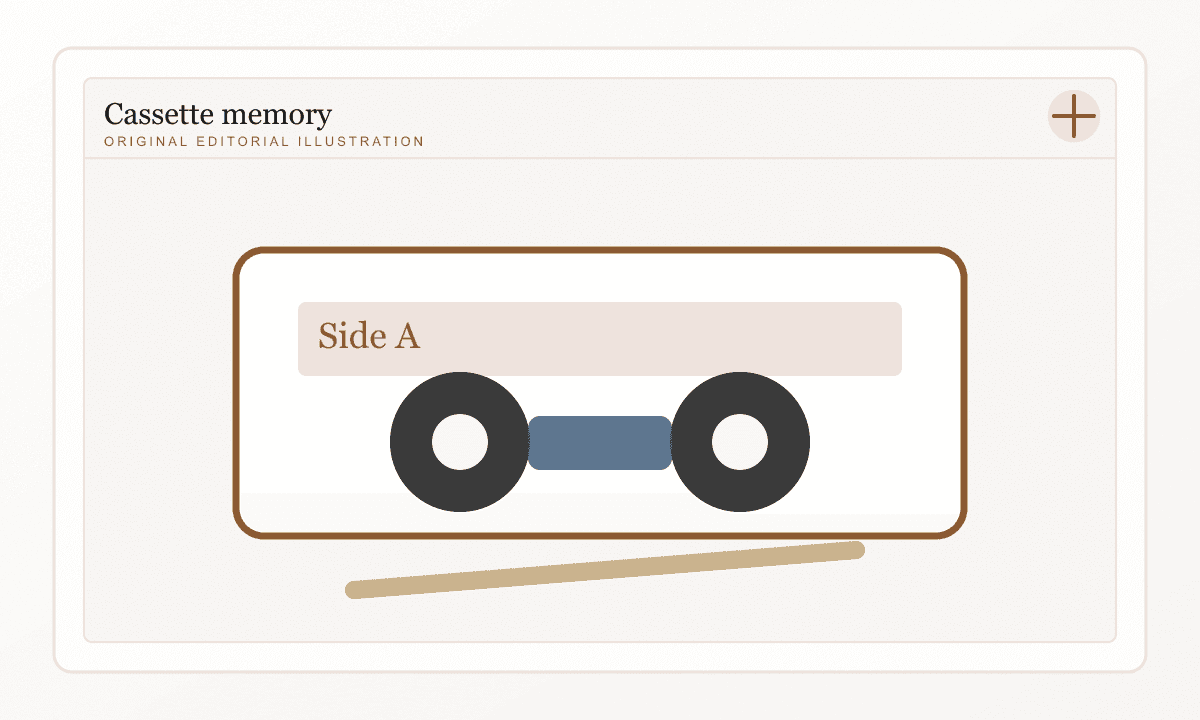
Streaming makes music available instantly, but cassettes made listening feel chosen. You had to record, rewind, flip and label them. Every tape carried small evidence of effort: a crossed-out title, a side A that ran out too soon, or a song taped from radio with the presenter's voice still attached.
That effort gave cassettes a social life. They moved between cousins, taxis, bedrooms and school bags. A tape could be borrowed, damaged, repaired with a pencil and played again.
Imperfect objects, stronger memories
The cassette was never perfect. It hissed. It stretched. It could trap its ribbon inside a player at the worst possible time. But those flaws are part of why the format feels warm in memory. The object made the act of listening visible.
Today, a playlist can be shared in seconds, but it often leaves no physical trace. A cassette looked back at you from a shelf and reminded you of the person, place or afternoon attached to it.
Why the format still matters
The point is not that tapes were better than streaming. It is that older formats shaped different behavior. They slowed people down. They made collections personal. They turned listening into an object you could hold, lend and lose.
Sources and notes
- Editorial note: use original photos, public-domain device imagery or properly licensed product shots when expanding this piece.